
บทความและความรู้
IP Network PA: 7 องค์ประกอบระบบเสียงตามสายแบบ IP
ส.ค.
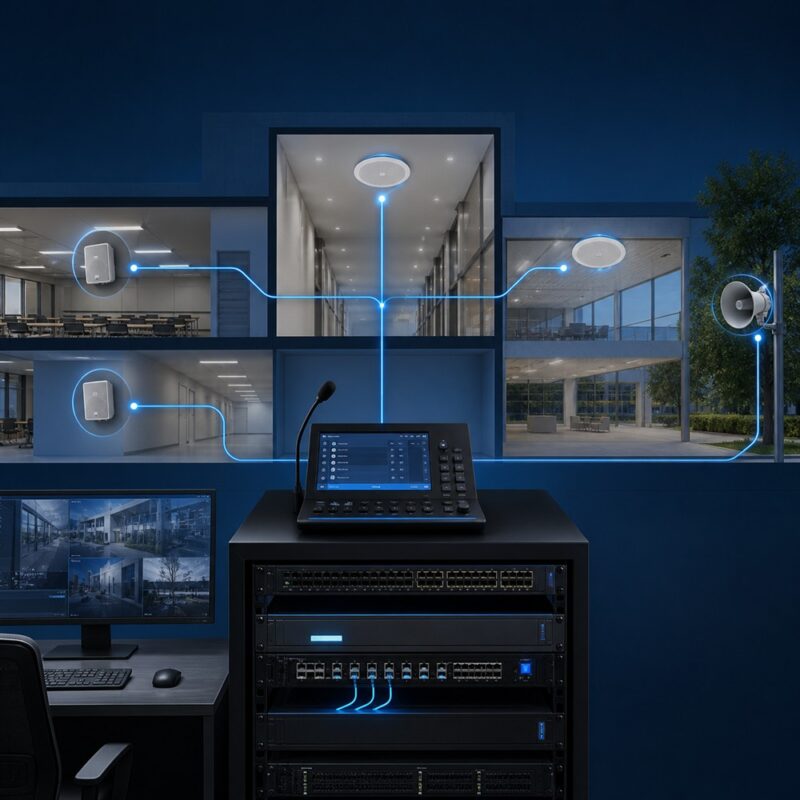
IP Network PA คือระบบเสียงตามสายที่ส่งสัญญาณเสียง คำสั่งควบคุม และสถานะอุปกรณ์ผ่านเครือข่าย IP ช่วยกระจายประกาศ เพลง เสียงเตือน และข้อความฉุกเฉินไปยังหลายพื้นที่จากศูนย์กลาง เหมาะกับโรงเรียน โรงพยาบาล โรงงาน อาคารสำนักงาน และพื้นที่ขนาดใหญ่ที่ต้องแบ่งโซนและควบคุมจากระยะไกล
IP Network PA ต่างจากระบบ Analog อย่างไร
ระบบ Analog มักส่งสัญญาณเสียงจากเครื่องขยายไปยังลำโพงด้วยสายเฉพาะและแบ่งโซนตามวงจร ส่วนระบบ IP ใช้โครงข่ายข้อมูลเชื่อม Server, Paging Console, IP Amplifier, IP Speaker และ Gateway ทำให้จัดการโซน ตารางเวลา ผู้ใช้ และการตรวจสอบสถานะได้ยืดหยุ่นกว่า แต่ต้องออกแบบ Network, Bandwidth, VLAN, QoS และความปลอดภัยให้เหมาะสม
7 องค์ประกอบหลักของระบบเสียงตามสาย IP
1. IP PA Server
เป็นศูนย์กลางจัดการผู้ใช้ โซน ตารางเวลา Playlist เหตุการณ์ฉุกเฉิน และบันทึกการทำงาน ควรมีระบบสำรองข้อมูลและสิทธิ์ผู้ดูแลหลายระดับ
2. Paging Console
ใช้พูดประกาศสด เลือกโซน เรียกทุกพื้นที่ และสั่งข้อความฉุกเฉิน ปุ่มควรจัดตาม workflow ของเจ้าหน้าที่และมีการยืนยันสถานะชัดเจน
3. IP Amplifier
รับเสียงผ่านเครือข่ายแล้วขยายกำลังไปยังลำโพง 70V/100V เหมาะกับการปรับปรุงระบบเดิมที่ยังใช้ลำโพง Analog จำนวนมาก
4. IP Speaker
ลำโพงมี Network Interface และ Amplifier ในตัว เชื่อมต่อเป็นอุปกรณ์ปลายทางรายจุด เหมาะกับพื้นที่ที่ต้องการระบุตำแหน่งและควบคุมแยกละเอียด
5. Gateway และ Interface
เชื่อมระบบโทรศัพท์ Fire Alarm วิทยุสื่อสาร ระบบเดิม และแหล่งเสียงภายนอก ต้องกำหนดระดับความสำคัญของสัญญาณและเงื่อนไขการทำงานร่วมกัน
6. Network Infrastructure
Switch, Fiber, PoE, VLAN, QoS, Multicast และ UPS มีผลต่อความต่อเนื่องของเสียง ควรแยก Broadcast Domain และเฝ้าระวังสถานะพอร์ตกับอุปกรณ์
7. ลำโพงและอะคูสติก
เลือก Ceiling, Wall Mount, Column หรือ Horn Speaker ตามพื้นที่ ระดับเสียงรบกวน และระยะครอบคลุม เสียงประกาศที่ดีต้องชัดเจน ไม่ใช่เพียงดัง
ขั้นตอนออกแบบ IP Network PA
- สำรวจพื้นที่ ระดับเสียงรบกวน และจำนวนโซน
- กำหนดประเภทประกาศ ตารางเวลา เพลง และเหตุการณ์ฉุกเฉิน
- เลือกตำแหน่งและประเภทลำโพง พร้อมคำนวณกำลังขยาย
- ออกแบบ Network, VLAN, QoS, IP Address และระบบสำรองไฟ
- กำหนดสิทธิ์ผู้ใช้ การบันทึก และการรักษาความปลอดภัย
- ทดสอบเสียงจริงทุกโซนและจัดทำแผนบำรุงรักษา
ควรใช้ IP Speaker หรือ IP Amplifier
| ตัวเลือก | เหมาะกับ |
|---|---|
| IP Speaker | อาคารใหม่ ควบคุมรายจุด ใช้ PoE และต้องการตรวจสอบอุปกรณ์ละเอียด |
| IP Amplifier | ปรับปรุงระบบเดิมที่มีสายลำโพง 70V/100V อยู่แล้ว หรือหลายลำโพงต่อหนึ่งโซน |
| Hybrid | โครงการที่มีทั้งอาคารใหม่และระบบเดิม ต้องการย้ายระบบเป็น IP แบบเป็นขั้นตอน |
ดูผลิตภัณฑ์ได้ที่ หมวดหมู่ IP Network PA System และศึกษาข้อมูลผลิตภัณฑ์จาก ITC
IP Network PA Design and Commissioning Checklist
- Use cases: define live paging, scheduled announcements, background music, class change bells, emergency messages, evacuation instructions, telephone paging, intercom, recording, and integration with fire alarm or building management systems.
- Zone design: map every building, floor, room, corridor, outdoor area, production line, gate, car park, and emergency zone. Define which operators may call each zone and which messages have priority.
- Acoustic survey: measure ambient noise, reverberation, ceiling height, wall materials, listener position, coverage distance, and required speech intelligibility. Select ceiling, wall, column, horn, or sound projector loudspeakers accordingly.
- Power calculation: calculate loudspeaker tap settings, amplifier load, spare capacity, circuit loss, cable size, rack power, PoE budget, UPS runtime, generator support, and shutdown behavior during an electrical fault.
- Network architecture: document IP address ranges, VLANs, QoS, multicast behavior, routing, firewall rules, switch capacity, PoE class, fiber uplinks, redundancy, spanning tree, monitoring, time synchronization, and remote support access.
- Cybersecurity: change default passwords, separate administrator roles, restrict management interfaces, disable unused services, protect API access, log changes, maintain firmware records, back up configuration, and define an update approval process.
- System priority: create a clear priority matrix for emergency triggers, fire alarm, security desk, live paging, scheduled announcements, telephone paging, background music, and local input. Test interruption and restoration behavior.
- Integration: verify contact inputs, relay outputs, SIP or telephone gateway, fire alarm interface, access control, CCTV events, digital signage, radio communication, prerecorded messages, and automatic event workflows.
- Commissioning: test every loudspeaker, zone call, group call, all-call, schedule, playlist, microphone, emergency trigger, backup path, network interruption, power failure, recovery, monitoring alarm, and event log.
- Handover: provide system diagram, IP schedule, zone list, rack layout, cable schedule, configuration backup, audio files, priority matrix, administrator accounts, operator training, maintenance plan, spare parts, warranty, and support contacts.
คำถามที่พบบ่อย
ระบบ IP ใช้ Network เดียวกับคอมพิวเตอร์ได้หรือไม่
ทำได้เมื่อออกแบบ VLAN, QoS, Bandwidth และความปลอดภัยเหมาะสม แต่ระบบฉุกเฉินควรพิจารณาความต่อเนื่องและเส้นทางสำรองแยกจากงานข้อมูลทั่วไป
ลำโพงเดิมใช้ต่อได้หรือไม่
ลำโพง 70V/100V เดิมอาจใช้ต่อผ่าน IP Amplifier ได้ หากสภาพลำโพง สาย และกำลังรวมเหมาะสม ควรตรวจวัดก่อนออกแบบ
สรุป: ระบบเสียงตามสายแบบ IP ช่วยให้แบ่งโซน บริหารตารางเวลา และตรวจสอบอุปกรณ์ได้สะดวก แต่คุณภาพของระบบขึ้นอยู่กับอะคูสติก Network ระบบไฟ ความปลอดภัย และการทดสอบจริงทุกพื้นที่
